

Key Takeaways
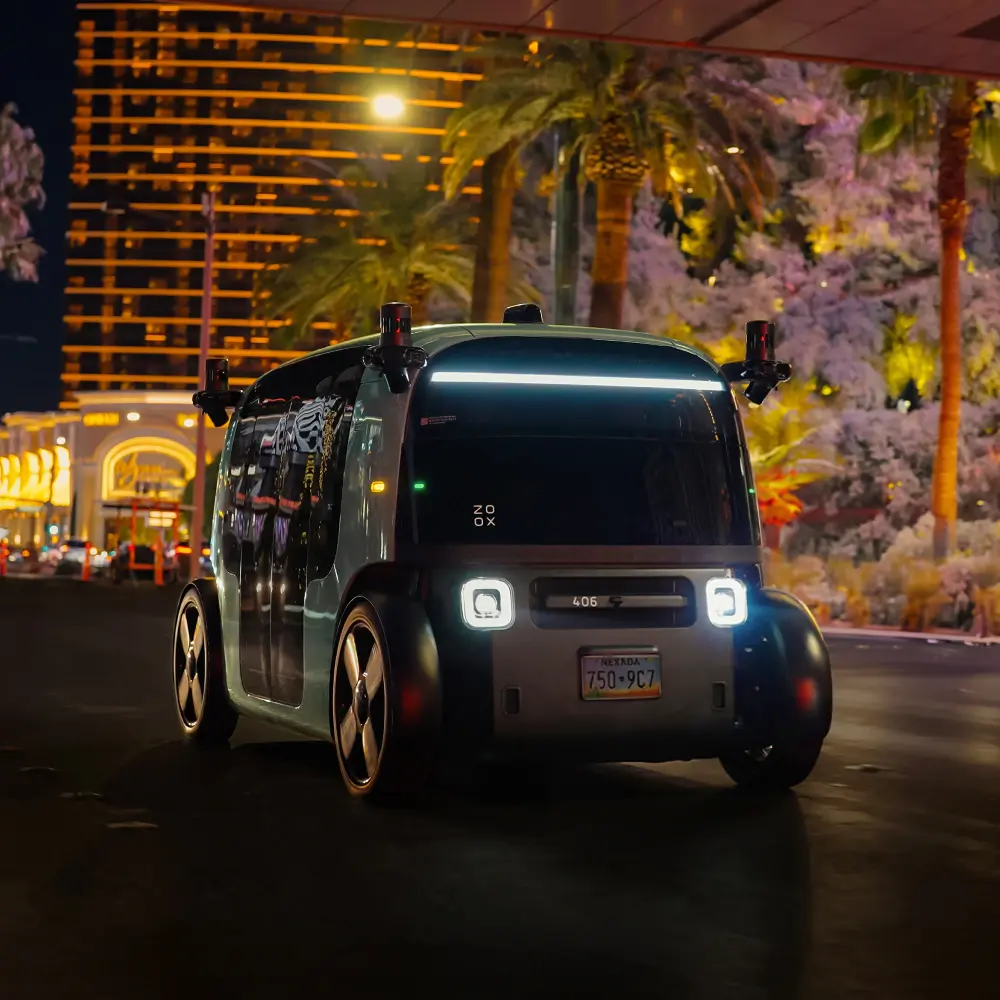
- Autonomous vehicles combine sensors, maps, software, and onboard computing to interpret the road around them.
- They must identify objects, predict possible movement, select an action, and continually reassess that action.
- City streets are especially challenging because traffic patterns can change within seconds.
- Safe deployment depends on vehicle design, careful testing, clear rules, road conditions, and human behavior.
Self-driving cars do not make one simple decision at a time. They continuously build a working picture of the street, estimate what nearby people and vehicles may do next, and choose the safest available response. To learn more about self-driving cars, it helps to think of the technology as a loop of sensing, prediction, planning, and control. That loop becomes much harder in a city. A vehicle may encounter pedestrians crossing between parked cars, a delivery truck blocking a lane, a cyclist avoiding a pothole, changing construction signs, and an ambulance approaching from behind, all within a single block.
Why City Streets Are a Hard Test
Highways usually have more predictable lanes, traffic flow, and sightlines. Urban streets contain frequent intersections, short stopping distances, parked vehicles, crosswalks, buses, curbside activity, and road users traveling at different speeds. A crowded four-way intersection might require a driver to notice a cyclist entering their path, yield to a pedestrian, and check whether another driver is turning across their lane.
Step 1: Building a Picture of the Surroundings
An autonomous vehicle uses multiple types of information because no single sensor is dependable under all conditions. Cameras can capture traffic lights, signs, lane markings, and visual details. Radar can help measure distance and relative movement. Lidar can help create a three-dimensional representation of nearby space. GPS and digital maps help locate the vehicle on its route, but they must be checked against the actual road. Combining these inputs lets the system compare signals. For example, a camera may show a stopped vehicle while radar helps confirm its distance and closing speed. If glare, rain, darkness, or a blocked sign limits visibility from one source, the vehicle may need to drive more cautiously.
Step 2: Identifying What the Vehicle Sees
Detection means recognizing that something is present. Identification means estimating what that thing is, such as a car, pedestrian, bicycle, animal, traffic cone, or construction barrier. This distinction matters because a person standing near a curb may remain on the sidewalk, step into a crosswalk, or move unexpectedly around a parked vehicle. Software uses location, shape, motion, and context to form those estimates. Still, damaged lane lines, obscured signals, unusual vehicles, poor weather, and visual clutter can increase uncertainty. A well-designed system should respond to uncertainty by creating more time and space, not by treating a guess as a certainty.
Step 3: Predicting What May Happen Next
Prediction is the effort to estimate several plausible paths for every relevant road user. A pedestrian turning toward a crosswalk may begin crossing. A parked car with its wheels angled outward may merge. A cyclist may move around a pothole. A vehicle ahead may brake suddenly. The system considers position, speed, spacing, signals, road layout, and prior movement, then updates its estimates as conditions change.
Step 4: Choosing a Safe Action
Once it has assessed the scene, the vehicle may continue, slow down, stop, yield, change lanes, or reroute. It weighs traffic rules, available road space, collision risk, passenger comfort, and the likely actions of others. The quickest option is not always the safest one. When the path cannot be confirmed clear, a brief pause or a full stop may be appropriate. If a sensor fault, a blocked roadway, or another problem prevents normal operation, the vehicle should adopt a minimal-risk response. Depending on the design and location, that can mean slowing, pulling over where feasible, stopping safely, or requesting remote support.
How Traffic Rules and Human Behavior Shape Decisions
Traffic lights, stop signs, speed limits, lane markings, and right-of-way rules provide the framework for driving decisions. Yet unprotected left turns, four-way stops, temporary signals, lane closures, and conflicting markings require interpretation. The federal guidance on automated vehicle safety also distinguishes between driver-assistance features, which still require an attentive driver, and higher levels of automation that operate only within defined conditions. Human behavior remains a major variable. Drivers may wave another vehicle through, signal late, or change lanes suddenly. Pedestrians may step into the street while looking at a phone. Cyclists may ride outside a bike lane to avoid debris or an opening car door. A cautious autonomous vehicle must avoid assuming that other road users will behave perfectly, while still moving predictably enough that people around it can understand its actions.
When the Road Does Not Match the Map
Maps can support routing and localization, but they are not a perfect copy of the world. Construction, flooding, damaged pavement, missing signs, blocked streets, and emergency scenes can change a route without warning. Live sensor readings must take priority over map information when they conflict. The vehicle may slow down, stop, take another route, or seek assistance rather than proceed through an unclear situation.
How to Read Safety Data
Crash totals alone cannot establish whether one driving system is safer than another. Meaningful comparisons consider miles traveled, crash severity, road type, traffic density, weather, lighting, and whether automation was engaged. An analysis of driverless-car crash rates illustrates why mileage and consistent reporting thresholds matter when comparing automated vehicles with human drivers. Early findings can be informative without proving that every system will perform equally well in every city. Public reporting of crashes and near misses, clear operating limits, and independent review all help create a more useful safety picture.
Common Questions About Autonomous Vehicles
How Does a Self-Driving Car Handle a Pedestrian?
It detects the person, estimates possible movement, checks speed and stopping distance, and slows or stops when yielding is necessary or uncertainty is high.
What Happens When Another Driver Cuts In?
The vehicle should adjust speed and preserve space rather than assume the other driver will complete the maneuver smoothly.
Can It Recognize an Emergency Vehicle?
It may use visible lights, sirens, vehicle position, and surrounding traffic behavior, then follow applicable road rules to make room when safe.
What Other Road Users Can Do
- Use turn signals early and avoid abrupt lane changes when possible.
- Follow posted signs and temporary traffic controls.
- Give vehicles, cyclists, and pedestrians enough space to react safely.
- Report unsafe behavior through appropriate local or service channels.
What Still Needs More Work
Severe weather, poor visibility, construction zones, emergency scenes, inconsistent local rules, and clearer public safety reporting remain important challenges. Self-driving cars may reduce some human driving errors, but they are not a magic feature. Their safety depends on careful sensing, sound prediction, conservative planning, honest testing, and streets designed for everyone who uses them.
Conclusion
Self-driving cars rely on a continuous process of sensing, identifying, predicting, planning, and adjusting to navigate roads safely. While advances in sensors, software, and onboard computing allow these vehicles to interpret complex traffic situations, city streets still present challenges that require careful decision-making. Pedestrians, cyclists, changing road conditions, construction zones, and unpredictable driver behavior can all affect how an autonomous vehicle responds. Understanding these limitations is just as important as recognizing the technology’s capabilities. Continued testing, transparent safety reporting, clear operating rules, and responsible vehicle design will help determine where autonomous systems can operate reliably. Ultimately, safer autonomous transportation depends not only on the vehicle itself but also on how well the technology works with other road users and the surrounding environment.

