

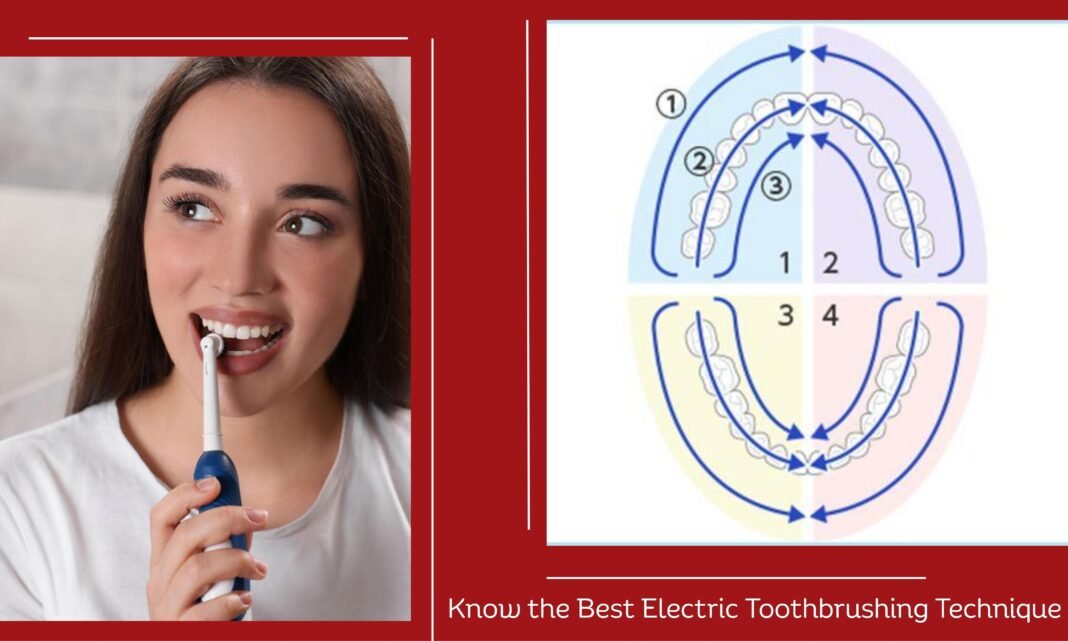

The ideal technique for electric toothbrushing is to position the brush head at a 45 degree angle toward the gumline, press softly, and let the toothbrush move—don’t scrub. Brush slowly from tooth to tooth, cleaning the outer, inner and chewing surfaces, for at least two minutes. Break your mouth into four parts and take 30 seconds on each part to equally clean. Proper brushing technique is used to effectively remove plaque, maintain gum health, limit risk of cavities and make teeth cleaner with minimal effort. This article will provide complete information about best electric toothbrushing technique in 2026.
What is Electric Toothbrushing Technique?
Electric toothbrushing is a technique for tooth brushing; it involves the use of a battery-powered or rechargeable toothbrush and brush head that is powered by a motor. The brush head oscillates, rotates or vibrates sonically to dislodge plaque and food particles, unlike manual toothbrushes, which are done by hand. Electric toothbrushes have been created to make brushing activities simpler and a lot more effective, while also contributing to excellent oral cleanliness. A Toothbrush with electricity has an electric brush head that vibrates quickly, cleaning the teeth and the gum line. User only need to move the brush gently on each tooth rather than scrub. Several models have timers and pressure sensors built in to promote correct brushing and brush pressure.
Best Electric Toothbrushing Technique
Step1: The first step is to wet the Brush Head
Moisten the brush head with water, and brush with a pea-sized dollop of fluoride toothpaste. This spreads the toothpaste evenly and will make the brushing more comfortable.
Step 2: Switch on the Brush Prior to Brushing Teeth
Turn on the electric toothbrush and apply it against the teeth while brushing gently without excessive pressure. Have the mechanical bristles clean rather than scrubbing.
Step 3: Place the Brush at a 45-Degree Angle
Angle brush at 45 degrees at the gumline of your teeth. This angle can help to remove plaque and clean the surface of the tooth, gum line and along the edges.
Step 4: Give the Brush the Work
Maintain pressure on each tooth for 2-3 seconds and then brush the next tooth. Hold and guide the brush head from tooth to tooth.
Step 5: The 5th step is to clean all surfaces
Brush outside, inside and chewing surfaces of all teeth, including back molars. Be sure to check the inside of the lower front teeth, which is where plaque and tartar build-up are most common.
Step 6: Brush the tongue
Use the back surface of the toothbrush bristles or toothbrush tongue cleaner (if available) to gently brush the tongue. This will help eliminate bacteria, bad breath and good oral hygiene.
Step 7: Rinse
Do spit out the extra toothpaste and don’t rinse your mouth excessively, otherwise all the fluoride will be washed away, eliminating its benefit to your teeth. Rinse brush brush head thoroughly under running water and make sure it is dry before storing.
Correct Brushing Angle
- Angle the electric toothbrush about 45 degrees towards the gums.
- Make sure the bristles are in contact with the edge of the gums and the teeth.
- This angle allows for better cleaning between teeth, gum line, and around plaque deposits.
- Slowly brush from tooth to tooth, keeping the angle the same.
- Do not be tempted to use the brush at a right angle or it will not reach the plaque that is along the gum line.
- Do not press the brush head, allow the electric bristles to clean.
How Much Pressure Should You Use?
- Use light, gentle pressure while brushing your teeth.
- Use the electric toothbrush, don’t press too hard.
- Some electric toothbrushes these days come with pressure sensors which will let you know if you are brushing too hard.
- Over-brushing can cause gum recession, enamel erosion, and tooth sensitivity.
- Excessive pressure also wears out brush heads more quickly, which decreases their cleaning power.
- The guideline is that the bristles should lightly press against the teeth and gums and not be bent or flattened.
How long should brushing teeth be?
The standard recommendation for dentists is two minutes of brushing two times a day.
It’s useful to break your mouth down into four quadrants:
- Upper right – 30 seconds
- Upper left – 30 seconds
- Lower right – 30 seconds
- Lower left – 30 seconds
Some electric toothbrushes have a timer that will remind you to brush your teeth every 30 seconds.
Benefits of Electric Toothbrushes
If properly used, electric toothbrushes have a few benefits.
- Better Plaque Removal: They move quickly, which aids in removing plaque, especially around the gum line.
- Improved Gum Health: Regular use may lead to lessening of gingivitis and gum inflammation.
- Easier to Use: Electric toothbrushes are easier for people with limited hand movement, who have arthritis or braces.
- Built-in Timers: Timers say to encourage brushing to the recommended amount of time.
- Pressure Sensors: These properties prevent over brushing and safeguard against gum damage.
Best Electric ToothBrush in 2026
| Electric Toothbrush Model | Approx. Price | Key Highlight |
| Lifelong Rechargeable Toothbrush | ₹349 | Best entry-level budget option with 5 brushing modes |
| beatXP Spark Sonic | ₹399 | Affordable sonic brush with 30,000 strokes/min |
| Oracura SB100 Sonic Lite | ₹545 | Battery-operated model with 30-second quadrant pacer |
| AGARO COSMIC Lite | ₹849 | 6 brushing modes and interdental cleaning head |
| Vega CareOne C4 (VETB-04) | ₹1,274 | Up to 60-day battery life with W-shaped bristles |
| Oral-B Blue Vitality Cross Action | ₹1,599 | Round oscillating head for deep plaque removal |
| ORACURA SB300 | ₹1,769 | 5 modes with 3 adjustable intensity levels |
| AGARO COSMIC PLUS | ₹1,799 | 40,000 strokes/min and includes a travel case |
| Oral-B Pro 3 | ₹2,899 | 360° pressure sensor helps protect gums |
| Philips Sonicare 7300 Series | ₹29,949 | Premium smart toothbrush with app support and 12 brushing settings |
Electric Toothbrush vs Manual Toothbrush
| Feature | Electric Toothbrush | Manual Toothbrush |
| Plaque Removal | Excellent | Good with proper technique |
| Ease of Use | Very easy | Requires more brushing skill |
| Built-in Timer | Yes (many models) | No |
| Pressure Control | Available on many models | User-controlled |
| Gum Protection | Better with pressure sensors | Depends on brushing habits |
| Cost | Higher upfront | Lower upfront |
| Brush Head Replacement | Every 3 months | Replace entire brush every 3 months |
While both can do a good job of cleaning teeth correctly, many find it easier to do so with an electric toothbrush.
When Should Brush Heads Be Changed?
It is recommended that the brush head be replaced every 3 months.
Change it sooner if:
- Bristles become frayed
- You have been ill
- Cleaning performance decreases
- On models with a brush head indicator, the indicator fades.
- The function of cleaning is reduced with a used brush head.
Dentist Recommendations
Here are some of the most common recommendations made by many dental professionals:
- Brush your teeth with fluoride toothpaste twice a day.
- Brush for a full 2 minutes.
- Use gentle pressure.
- Change brushheads every 3 months.
- Floss or use interdental brushes every day between the teeth.
- Get regular check-ups and cleanings at the dentist’s office.
- Select a brush head that suits your requirements—sensitive, whitening or orthodontic brush heads.
Conclusion
Properly brushing with the best electric toothbrushing technique can greatly enhance oral hygiene, and help maintain healthy teeth and gums. The secret is to brush lightly, to keep the brush at a 45 degree angle, and let the machine do the scrubbing. Brushing twice a day for two minutes, changing the brush head every 3 months and cleaning all surfaces of the teeth will produce the best results. An electric toothbrush can help to minimize plaque, support healthier gums, cavity prevention and a cleaner, brighter smile, when combined with daily flossing, fluoride toothpaste and regular dental checkups.
FAQs
Brush for 2 minutes, twice a day.
Yes, you absolutely must brush for much longer than 20 seconds.
Change every 3 months or as soon as they are worn.
It can remove plaque better and is simpler to use by many for proper application.
Yes, they can use an age appropriate model and are supervised if necessary.