

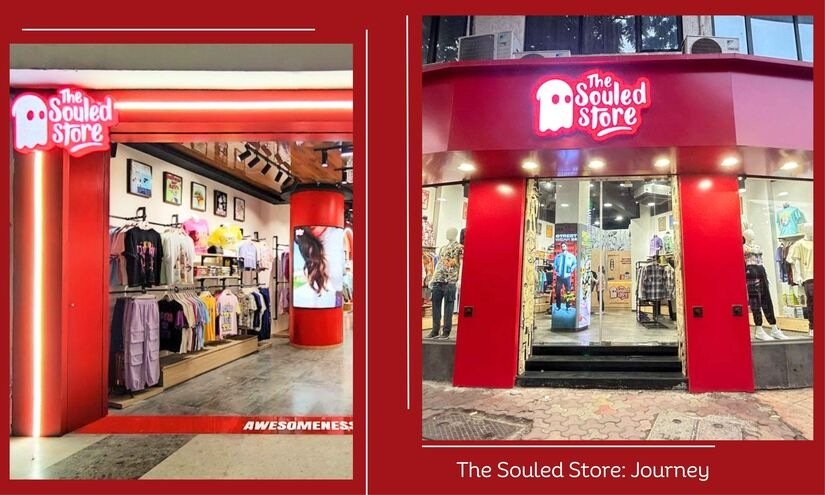
In 2013, four friends in Mumbai realized that there was a void that most people were not aware of: Indian fans of Marvel, DC and Harry Potter had virtually no means to purchase authentic merchandise, only expensive imports or counterfeits. So, Vedang Patel, Rohin Samtaney, Aditya Sharma and Harsh Lal decided to change that, with only ₹5.25 lakh in their savings and a single storage cupboard. Today, that experiment has expanded to become The Souled Store, which is estimated to be worth ₹1,420 crore and is India’s biggest officially licensed pop culture store. The Souled Store’s story is a unique example of how a D2C brand can create a lasting impression without copying, but by filling a void that no one else had filled.
In This article you’ll know the complete journey of the Souled Store from scratch
The Souled Store Company Overview
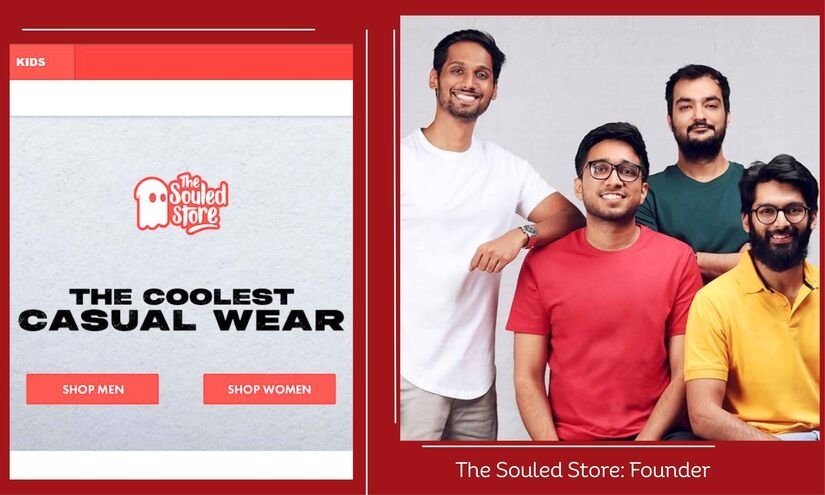
The Souled Store’s mission is to make fandom fashion. It started as a scrappy, self-funded business and has since become the nation’s leading official pop-culture retailer, selling licensed IP and direct-to-consumer. Here’s a snapshot of The Souled Store as a business today.
| Metrics | Details |
| Brand Name | The Souled Store |
| Founded | 2013 |
| Founders | Rohin Samtaney, Aditya Sharma, Harsh Lal, Vedang Patel |
| Headquater | Mumbai, Maharashtra |
| Products | Apparel, Sneakers, Footwear, Accessories, Lifestyle Products |
| Retail Presence | Website, Mobile App & 40+ Offline Stores |
| Current Valuation | ₹1,420 crore |
Souled Store Valuation
The Souled Store is now estimated to be worth ₹1,420 crore. There are two important factors that have contributed to this growth: The company’s business model was not to directly compete in the fast fashion market, but to sell officially licensed products. The founding team has maintained a majority stake in the company, with around 56.28% of the equity, ensuring that they have been able to guide the company’s long-term trajectory without outside influence.
How Souled Store Started
The opportunity: In 2013, the real movie, superhero and entertainment merchandise was either too costly or was available in unauthorized and sometimes counterfeit outlets in India. There were not many reliable sources for fans to get true-to-the-franchise products.
The idea: The creators wanted to create a single platform where customers could purchase original, high-quality products based on their favorite movies, comics, anime and television series.
The leap of faith: The commitment to this idea was huge, co-founder Vedang Patel rejected offers of admission from three Indian Institutes of Management (IIMs) to take the venture full-time.
Souled Store Execution Journey
Souled Store’s journey has seen it grow over three phases.
Phase 1: Bootstrapped beginnings (2013–2018)
The four founders started off with ₹5.25 lakh collectively as seed capital saved up from their personal accounts. Operations were based out of one room, with merchandise stocked in one cupboard in the office. All jobs were completed by the founders, including packaging products and arranging shipments.
Phase 2: Developing a unique identity (2018–2022)
Instead of going toe-to-toe with existing fashion brands, Souled Store focused on merchandise that was officially licensed. By reaching out to entertainment companies overseas and discussing licensing directly, Souled Store was able to find products that other shirt brands didn’t offer, giving them a competitive edge.
Phase 3: Omnichannel outreach (2022–Present)
Seeing advertising costs rise in online spaces, Souled Store made the move into offline retail as well, opening over 40 outlets in key metropolitan cities across India. They’ve also started to expand into high-margin segments like sneakers, collectibles, and lifestyle merch. Early 2025 saw the acquisition of rival brand Redwolf.
Key Investors of The Souled Store
Souled Store bootstrapped with zero external funding and remained profitable until a few years ago. It did not accept any institutional funding until its revenue reached ₹30 crore ($3.6 million). The startup has since gone on to raise nearly $29.7 million over multiple rounds.
Some of its prominent investors are –
Elevation Capital – Souled Store’s largest institutional investor.
Xponentia Capital Partners – Led a $16.4 million funding round in March 2023 to expand retail operations.
Alteria Capital – Offered venture debt and working capital assistance.
Difficulties and Challenges Faced
Skyrocketing success of this magnitude has not come without its challenges.
Royalty payments. Movie and entertainment merchandise distributors are typically required to pay hefty upfront license fees called Minimum Guarantees, placing the brand at risk if a movie or series doesn’t perform.
Large product catalog: Controlling inventory across more than 4,000 SKUs can become cumbersome. About 1,000 products make up the majority of sales. The long tail of the remaining products incur costs for storage and inventory holding without contributing significant revenue.
Changing pop-culture interests: Popular products are only as popular as the movie, series, or anime they’re associated with. If the content doesn’t perform well, you’re left with dead inventory.
Legal and regulatory hurdles: Operating under license also means managing royalties, copyrights, accounting regulations, and anti-counterfeiting initiatives by market.
The Souled Store Business Model
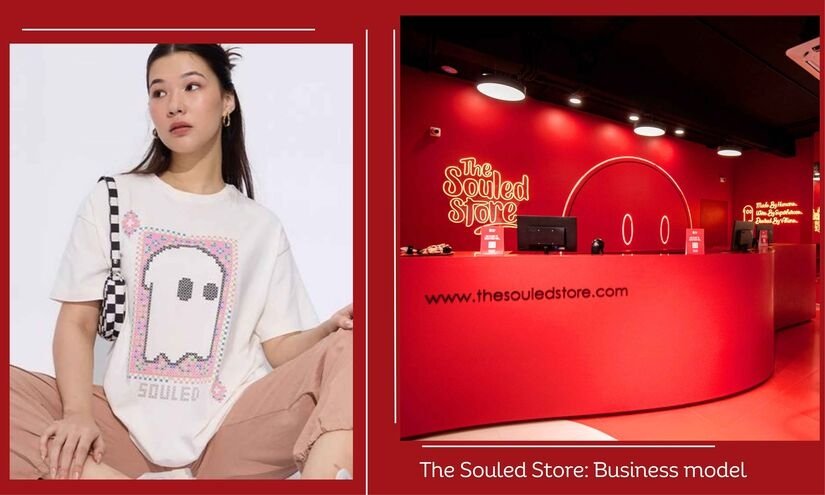
At its simplest, The Souled Store operates primarily using a vertically integrated structure:
Design & Product Development → Official IP Licensing → Inventory & Logistics → Direct-2-Consumer Sales
Some notable strengths:
Direct-2-consumer sales. Generating over 90% of its revenue through the company’s own website and mobile application, Souled Store is able to circumvent commission from third-party retailers while also retaining direct contact with consumers.
Official licensing. Souled Store currently has licenses for over 200 global entertainment brands including Marvel, DC Comics, Disney, Harry Potter, Naruto, and One Piece.
Souled Tribe Loyalty program. Their membership program grants early access to new releases, free delivery, and exclusive discounts for members. The loyalty program has played a key role in retention, driving approximately 60% of repeat purchases with members making annual repeat purchases close to 200%.
Year Wise Revenue of The Souled Store
Souled Store’s revenue streams are growing consistently as expenses naturally increase with business growth.
| Fiscal Year | Operating Revenue | Net Profit/Loss | Highlights |
| FY21 | ₹79.6 Crore | Profitable | Strong online demand during the pandemic |
| FY22 | ₹145.1 Crore | (₹26.7 Crore) Loss | Higher marketing expenses and celebrity campaigns |
| FY23 | ₹233.5 Crore | Breakeven / Small Profit | Better supply chain and retail store testing |
| FY24 | ₹360.2 Crore | ₹17.7 Crore Profit | Strong contribution from offline stores |
| FY25 | ₹492.4 Crore | ₹11.0 Crore Profit | Revenue grew 37%, while profits declined due to higher taxes and procurement costs |
Operating Costs (FY25 Estimates)
- Procurement & Inventory Expenses ( ₹210 Crore): Biggest spending category, grew 40.8% YoY as production increased.
- Marketing ( ₹57 Crore): Digital ads, brand campaigns and celebrity endorsements, among others.
- Employee Expenses ( ₹54 Crore): Salary paid to employees in design, corporate and retail.
- Licensing & Royalty Fees: Payments made to global entertainment companies for rights to sell merchandise.
Key Milestones
- 2013: Founded with ₹5.25 lakh of the founder’s savings
- 2018: Raised first round of institutional funding having crossed ₹30 crore in bootstrapped revenues
- 2023: Surpassed 5 million registered users on its app and closed a large funding round with Xponentia Capital
- 2025: Nears ₹500 crore in annual revenues and acquires Redwolf to further consolidate its spot as the leader in India’s pop- culture merchandise category.
Conclusion
The rise of The Souled Store teaches us that humble beginnings (if paired with a simple idea launched at the right time) have the potential to become large-scale businesses with the right strategy and discipline in place. Instead of battling it out in India’s saturated fast-fashion space, founders Vedang Patel, Rohin Samtaney, Aditya Sharma, and Harsh Lal decided to double down on official licensing and organic fandom—a smaller market but a much more defensible niche.
Bootstrapped from a storage cupboard into what is today estimated to be a ₹1,420 crore enterprise, the brand’s journey is testament to the power of bootstrapping your brand, retaining customers, and staying agile. As they look to build standalone D2C brands, founders can take a leaf out of Souled Store’s book for lessons on product-market fit, differentiated branding, and building a business that can stand the test of time.
FAQs
The Souled Store is owned by Vedang Patel, Rohin Samtaney, Aditya Sharma and Harsh Lal. All four continue to manage the business and hold 56.28% equity of the company.
The Souled Store is valued at ₹1,420 crore. Its high valuation is backed by consistent revenue growth, licensing partnerships and rapid expansion of its offline stores.
The Souled Store’s net profit dropped to ₹11 crore in FY25, from ₹17.7 crore the previous year. This was mainly due to increased taxes and higher procurement costs. While revenue grew 37% to ₹492.4 crore in FY25, the company is continuing to invest in offline expansion.
While many companies have dabbled in fashionable apparel over the years, few have official licenses to sell pop-culture merchandise. The Souled Store is partnered with over 200 entertainment brands across the globe.
Yes. Following years of investment, the business became profitable again in FY24 with ₹17.7 crore worth of profit. This continued into FY25 with ₹11 crore worth of profit.
Also Read: SUGAR Cosmetics: Business Model, Omnichannel Strategy, Revenue Streams & Growth

